
The Gen XY Lifestyle
Badminton for All: Coventry University and BWF Launch Global Health Programme for Seniors
Coventry University is spearheading a pioneering international programme designed to improve the health, mobility, and social lives of older adults through the sport of badminton.
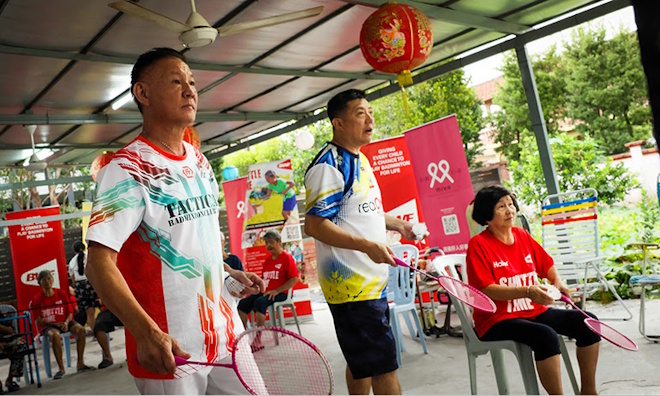
Developed in close collaboration with the Badminton World Federation (BWF), the Shuttle Time for Seniors programme is an adaptation of a globally successful initiative originally created for children. This new framework is specifically engineered to help seniors maintain movement skills, preserve independence, and build community connections.
Professor Mike Duncan, director for Coventry University’s Research Centre for Physical Activity, Sport and Exercise Sciences (PASES), noted that while the physical movement is vital, the sense of belonging is what keeps participants returning. “It’s about moving at your own pace, together as a group. That social element, the tea and coffee afterwards… that’s just as important as the physical activity,” he added.
Why Badminton for Older Adults?
Research indicates that racket sports like badminton are uniquely suited to the needs of older populations. The benefits include:
- Physical Health: The sport combines multi-directional movement, coordination, and low injury risk while stimulating muscle, bone, and joint health.
- Cognitive and Functional Benefits: Trials demonstrated significant improvements in functional movement, physical confidence, and decision-making.
- Mental Wellbeing: Participants reported higher levels of mental wellbeing and social connectedness.
Dr Jason Tallis, principal investigator on the project, highlighted that badminton serves as an important vehicle for sustaining wellbeing, provided that traditional barriers to participation are addressed through community-based interventions.
A Global Roll-out
Following successful trials, the programme has officially launched internationally and is already impacting lives in Singapore, Malaysia, and South Africa.
The sessions are not standard exercise routines; they incorporate age-appropriate badminton activities, balance and coordination work, and cognitive engagement. Most importantly, they include dedicated time for social interaction to combat isolation among the elderly.
Sahir Edoo, Head of Development Projects at the BWF, stated that the collaboration reinforces their commitment to “badminton for all,” ensuring the sport enriches communities across every stage of life. With further global expansion planned, the initiative aims to provide seniors worldwide with the physical and psychological confidence to remain active for life.
Picture courtesy of Coventry University and BWF.