
Health x Wellness
Life Above All: National Life Saving Day 2026 Urges Emergency Readiness in Senior Care
As Singapore officially becomes a super-aged society in 2026, the Singapore Heart Foundation (SHF) is calling for a massive increase in the number of trained lifesavers to combat a predicted surge in cardiac emergencies among the elderly.
With more than one in five Singaporeans now aged 65 or older, the incidence of out-of-hospital cardiac arrests (OHCA) is expected to rise exponentially. Currently, nearly 80 percent of these cases occur in residential or public settings, and research confirms that those over 65 face the highest risk.
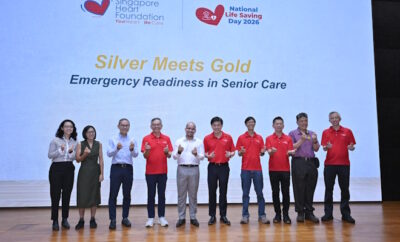
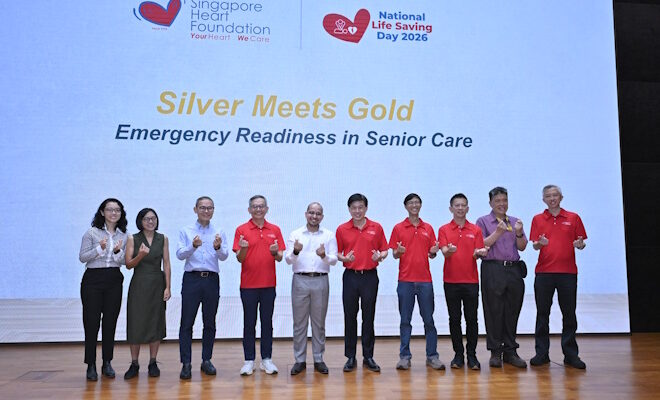
The National Life Saving Day 2026 (NLSD 2026) event, themed “Silver Meets Gold: Emergency Readiness in Senior Care,” specifically targeted professional caregivers from nursing homes, active ageing centres, and private home care agencies.
Overcoming the “Good Samaritan” Hesitation
A significant focus of this year’s initiative is addressing the legal and ethical fears that cause even trained responders to hesitate during a crisis.
Some caregivers and members of the public worry about the legal implications of resuscitating a casualty who may have an Advance Care Planning (ACP) or Advanced Medical Directive (AMD) arrangement in place.
“Every second counts when responding to a medical emergency,” said Dr Joanna Chan Shi En, Emergency Medicine Consultant at Singapore General Hospital. She emphasised that in situations where a patient’s medical history is unknown outside of a healthcare facility, responders must act quickly.
Key reassurances for first responders include:
- Legal Protection: Individuals who act in “good faith” to save a life will be protected under the law.
- No Penalisation: Rescuers will not be penalised if their actions were performed with reasonable care proportionate to their skills.
- Ethical Priority: SHF maintains that saving a life should always be placed above all other considerations in a cardiac emergency.
The Critical Four-Minute Window
Professor Ching Chi Keong, SHF’s Honorary Secretary, highlighted that the first four minutes after a sudden cardiac arrest are the most crucial. This narrow window determines whether a senior survives without irreversible brain damage.
“Caregivers and members of the public can play an important role by equipping themselves with CPR and AED skills and rising to the occasion without hesitation,” Professor Ching stated.
Industry leaders are echoing this stance. Ms Nora Binte Salleh, Head of Nursing at Active Global Home & Community Care, noted that her organisation’s position is always to save lives to the best of their abilities, regardless of any known ACP or AMD arrangements. “Every caregiver represents a vital link in the chain of survival,” she added.
By empowering professional caregivers and the community to act decisively, the SHF aims to make every elderly care institution and community space a “heart safe” place for Singapore’s seniors.
Pictures credit to Singapore Heart Foundation.