
Health x Wellness
SUSS Partners with Local Restaurants to Launch Dysphagia-Friendly Menus in Singapore
For the first time in Singapore, mainstream restaurants are serving dysphagia-friendly meals, marking a significant step toward a more inclusive society for older adults and individuals with swallowing difficulties.
Led by the Singapore University of Social Sciences (SUSS), the initiative is being piloted through a pop-up dining programme in collaboration with Imperial Treasure (Great World City) and 5 Senses Café & Restaurant. The project demonstrates how chewing- and swallowing-friendly options can be integrated into high-quality restaurant menus without sacrificing visual appeal or flavour.
Addressing an Overlooked Challenge
Dysphagia, a medical condition that affects swallowing, currently impacts approximately one in seven older adults (15 percent) in Singapore. It also frequently affects stroke survivors and individuals living with neurological conditions such as Parkinson’s disease and dementia.
While specialised meals are common in care settings, they are rarely available in mainstream dining outlets. This gap often prevents families from dining out together, leading to social isolation for those with the condition.
“This pilot serves to address a real and growing need and supports ageing in place,” said Associate Professor Carol Ma, Head of Gerontology Programmes at SUSS. “SUSS is excited to be partnering with local restaurants to remove barriers that often keep families and friends from dining together.”
Redefining “Soft Meals”
The pilot menus feature texture-modified versions of well-loved local and Chinese dishes, proving that inclusive dining can be both sophisticated and comforting. These dishes are prepared according to the International Dysphagia Diet Standardisation (IDDSI) Framework.
Menu Highlights:
- Imperial Treasure (Great World City):
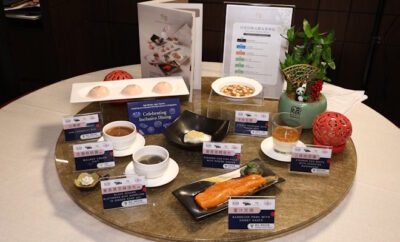
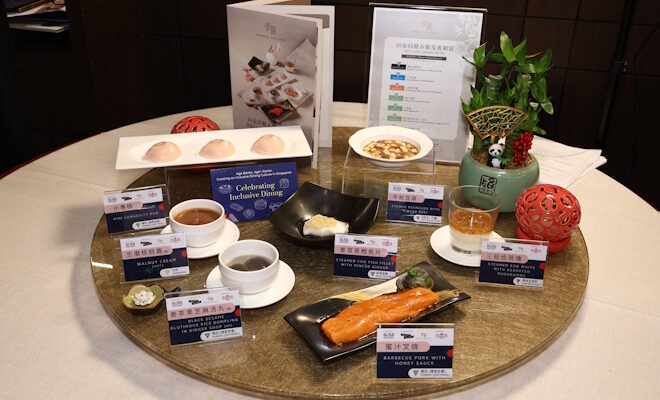
- Stewed Beancurd with Minced Beef (IDDSI 6): Features silky tofu cut into precise 1.5 cm cubes with easy-to-chew minced Angus beef.
- Barbecue Pork with Honey Sauce (IDDSI 4): A classic Cantonese favourite reimagined by blending roasted pork with soft-meal gellant and re-moulding it to retain its authentic shape and caramelised finish.
- Mini Longevity Bun (IDDSI 4): A soft-meal version of the traditional steamed bun that offers a melt-in-the-mouth experience while preserving its original flavour.
- 5 Senses Café & Restaurant:
- Hokkien Noodles with Fish Cake (IDDSI 6): Traditional Singaporean noodles where prawns and fibrous chives are replaced with soft fish cake, all cut into bite-sized pieces
- Traditional Hainanese Chicken Rice (IDDSI 4): Chicken and rice are individually blended with stock and re-moulded to achieve a velvety, easy-to-swallow texture while retaining familiar flavours.
- Traditional Kaya Toast (IDDSI 4): Soft white bread is toasted for aroma, then blended and re-moulded into a toast shape, topped with thickened kaya sauce.
Building Sustainable Inclusion
To ensure this movement lasts beyond the pilot phase, SUSS is training restaurant staff and providing tools for soft-meal preparation. This includes training for both kitchen and frontline teams to better understand the specific needs of diners with swallowing difficulties.
The inclusive dining pilot is part of SUSS’ broader Age Better, Age+ movement, which has engaged more than 3,000 beneficiaries to date. As Singapore transitions into a super-aged society, SUSS plans to continue working with industry partners to make everyday experiences accessible to all.
Photo credit: SUSS